Solar loan vs lease, compared
Thinking about solar? This guide compares a **solar loan** vs a **solar lease** (and similar PPA-style options) so you can understand trade-offs like upfront cost, tax credit, monthly payments, and maintenance—then compare real quotes.

Quick overview: what changes between a loan and a lease?
A solar loan usually means you buy the system (or own it) and repay the loan over time.
A solar lease usually means you rent the system from a provider, and you make monthly lease payments for using the solar power (sometimes similar to a PPA).
On this page, we focus on common patterns. Your state rules, utility rates, and contract terms can change the numbers—so always compare the full proposal side by side.
Ownership, tax credit, and who gets benefits
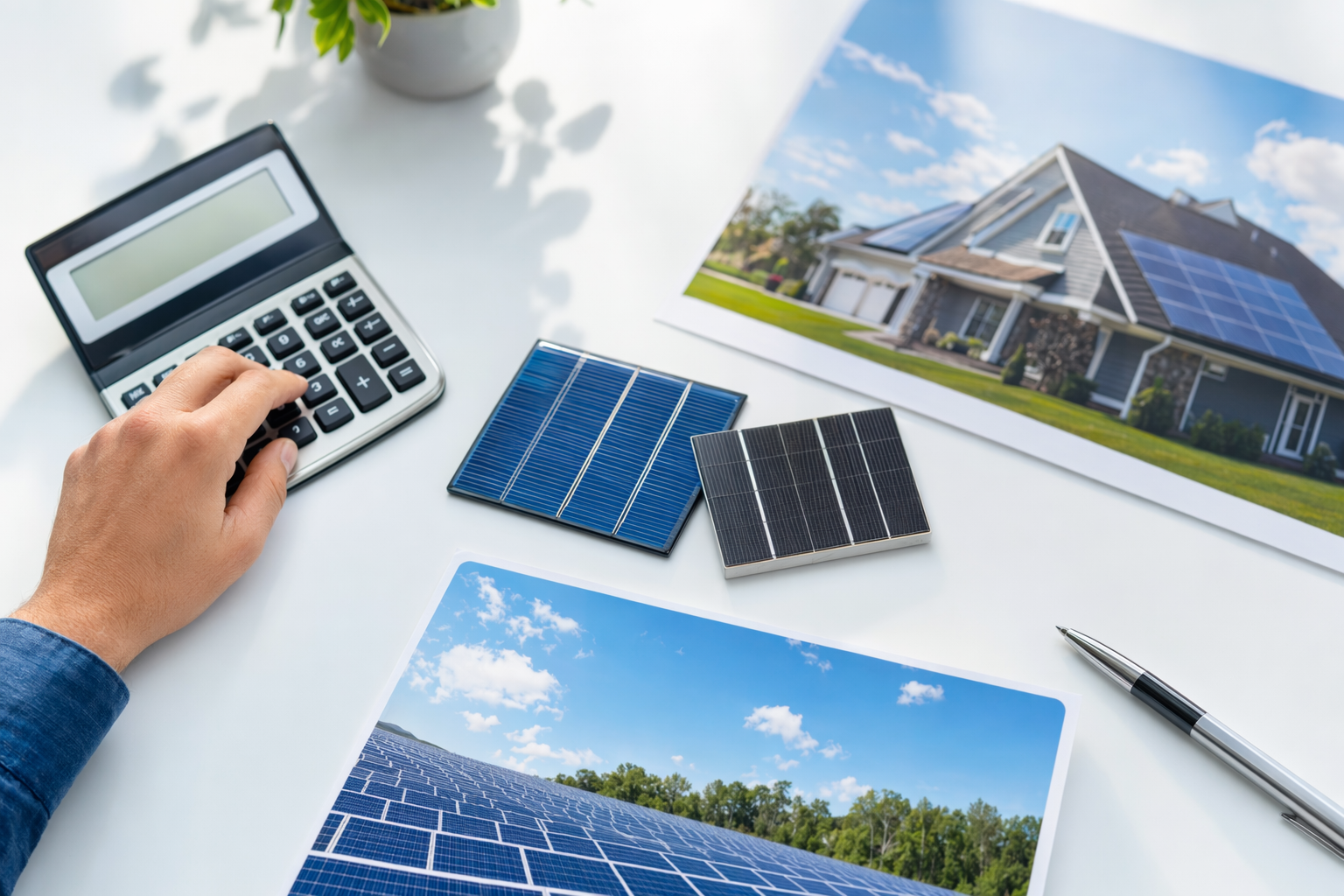
One of the biggest differences is the federal tax credit (often called the ITC). In many loan and lease setups, the provider may claim the tax credit on leases/PPAs, while homeowners who own the system may be able to claim it with a loan or purchase.
That can affect your monthly cost and how savings are split. But the exact outcome depends on the contract structure and your eligibility.
Tip: Ask each provider in writing: Who claims the federal tax credit in your specific offer? Is it passed through to the homeowner as a lower price, lower payments, or something else?
Monthly cost: what you can expect (and what can change)
A lease often has lower or no upfront cost, which can make the monthly payment easier at first. However, many leases include payment escalators (for example, payments may rise by a set percentage each year). That means the payment may be higher later, even if your utility bills might rise or fall differently.
A loan usually has a higher upfront cost (down payment and/or loan origination costs may apply), but the monthly loan payment is often more predictable. Still, your utility rates can still change over time.
For any option, request a clear breakdown showing:
- Estimated monthly payment (and any escalators)
- Term length (often 15–25+ years for leases)
- What happens at the end (renewal, buyout price, or system transfer)
- How the proposal compares to your current utility bill
Important: There are no guaranteed savings. Savings can vary based on your home, roof, system size, local rates, and contract terms.
Maintenance, repairs, and what you’re responsible for
With a lease, the provider typically handles system maintenance and repairs under the contract. That can reduce your day-to-day responsibilities, but you should confirm the details in writing—what’s covered, what isn’t, response times, and any exclusions.
With a loan (ownership), you generally take on more responsibility for maintenance. Many owners still choose monitoring and maintenance plans, but the contract may be different from a lease.
When comparing quotes, ask:
- Is maintenance included? For how long?
- Who covers inverter replacement and roof-related issues?
- Are there service-level timelines?
- Are there warranties (system and workmanship)?
Tip: Be careful with vague promises. Look for the coverage terms, not just the summary.
End of term: buyout, renewal, and long-term flexibility
Leases often come with a fixed term and options at the end—commonly renewal or a buyout of the system at a set price formula. The buyout amount can materially change your long-term value.
With a loan, you keep ownership once the loan is paid off. That can support more long-term flexibility, like upgrading later (subject to roof and system capacity) and potentially maximizing long-run utility savings, but you typically have higher upfront costs.
Because the end-of-term rules can vary widely, treat this as a key comparison point. Ask for the exact end-of-term language and any costs that may apply.
How to compare real quotes (and what to ask before you sign)
To make this fair and easy, compare proposals using the same checklist. If you want help connecting with vetted local providers, you can start with free matching here: Get matched.
When you receive offers, compare them on the same items:
- Price and monthly payment (including any escalators)
- Contract term length
- Who claims the federal tax credit and how it affects your offer
- Maintenance and repair coverage (what’s included vs excluded)
- Decommissioning/removal and roof change rules
- Cancellation/transfer terms (especially if you might move)
Read the contract all the way through. Don’t sign on the spot, especially if someone is pressuring you by phone or door-to-door—some states regulate these sales practices, and it’s okay to take time.
If you’d like a broader overview of your solar options, see Solutions.
A loan usually means owning the system with more long-term potential but higher upfront cost, while a lease often lowers upfront cost but may have rising payments and provider-based tax credit—compare offers carefully before choosing.