Solar PPAs: paying for the power, not the panels
A Solar PPA (power purchase agreement) lets you pay for the electricity your roof generates, usually at a set rate per kWh. SunWise Lease is a FREE service that helps you compare options and connect with vetted local solar providers.
What a Solar PPA is (plain-English)
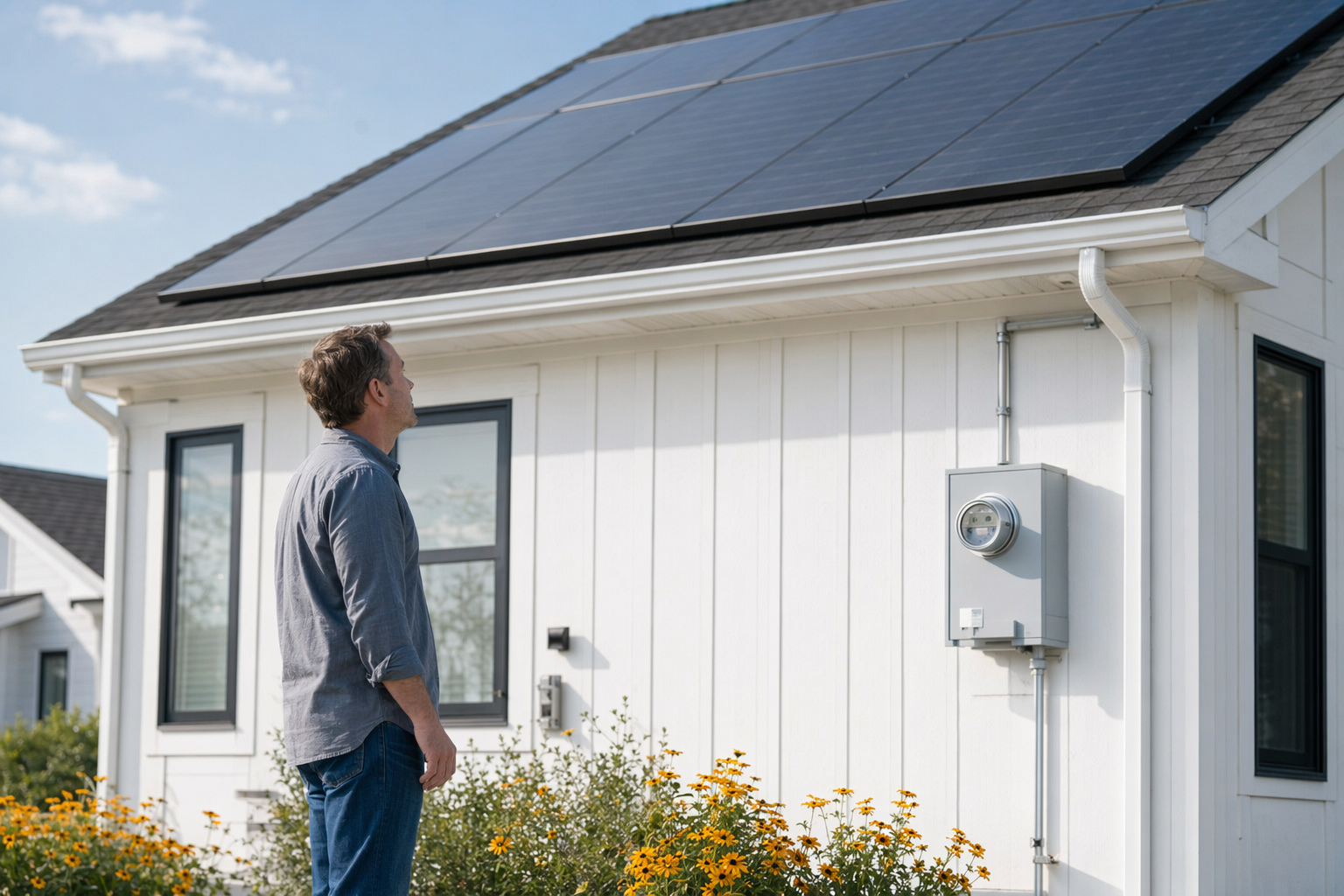
A solar PPA is a contract where a third party (often the solar provider/owner) installs and owns the solar system on your home.
Instead of buying the panels, you pay for the electricity (power) the system produces. That payment is usually based on a price per kWh (kilowatt-hour), which is the unit your utility uses.
Your actual savings (if any) depend on your utility rates, solar output, your contract terms, and your state rules. We can’t guarantee savings because every home and deal is different.
How a PPA payment usually works (rate, term, and escalators)

Most PPAs use a formula that includes:
- Rate per kWh: The contract sets a starting price for each kWh of solar power.
- Escalator: Many PPAs increase the kWh price over time. Escalators can range from about 1% to 3% per year (varies widely by provider and contract).
- Contract length: Terms often run roughly 15 to 25 years.
Here’s the big idea: with a PPA, your payment can rise over time if the contract includes an escalator. Some deals may also have rules about how production is measured and how you’re billed.
Before you sign, make sure you understand every number: the starting per-kWh rate, escalator details, term length, billing method, and what happens if production is lower than expected.
Typical costs and what you may pay (and not pay)
Because the provider usually owns the system, you typically have little to no upfront cost for the panels. Your monthly cost is mainly the PPA payment for kWh produced, plus your regular utility bill.
However, you may still have other costs depending on your contract and home, such as:
- Possible small monthly/administrative fees (varies)
- Electricity charges for the power you use that the solar system doesn’t cover
- Fees or charges if you want to change or end the contract early (details vary a lot)
Important trade-off: in many PPA setups, the provider (not you) typically claims the federal tax credits. That’s one reason these options can have lower upfront costs for you—but it can also mean you need to compare the long-term math carefully.
Pros, cons, and who PPAs may suit best
PPAs can be a good fit if you want low upfront cost and prefer to pay for power instead of owning equipment.
Pros people like:
- Less upfront money than buying panels
- You may get help with installation and maintenance structure through the provider (confirm responsibilities in the contract)
- A clear way to understand payments based on kWh produced
Cons to watch closely:
- Escalators can increase your per-kWh rate over time
- Your savings (if any) vary—your utility rates and your home’s solar production matter a lot
- Long contracts (often 15–25 years) can make it harder to switch plans
- There can be rules about transfer/sale of your home, early termination, and performance guarantees
If you’re new to solar or still deciding, start by comparing PPAs to other options like a lease or a loan at compare solar financing. If you want a quick overview of how leasing-style deals work, see how solar leasing works.
How to compare PPA offers (what to get in writing)
Not all PPAs are the same. When you compare offers, ask for the same key details from each provider. A good quote should be clear and in writing.
Consider these questions:
- Starting PPA rate ($/kWh) and the escalator rate (how fast it increases)
- Contract term (years) and when payments start
- Metering and measurement: how kWh production is calculated
- Who is responsible for maintenance and repairs (and what counts as normal vs. not)
- Performance expectations: what happens if the system underperforms
- Early termination and transfer rules if you move or want to change deals
- Any fees besides the per-kWh payment
We recommend you also compare your provider’s proposal to your current utility pricing. Solar savings can be higher in some places and scenarios, and lower in others—there’s no one-size-fits-all answer.
To explore options with less guesswork, you can get matched with vetted local providers through SunWise Lease. You can also browse general options at solar solutions.
Before you sign: safety checks and time to decide
Take your time. A solar contract is a long commitment, and the fine print matters.
- Do not sign on the spot. Ask for time to review.
- Be extra careful with high-pressure door-to-door or phone sales. Some states have rules for disclosures and rescission periods—check your contract and local regulations.
- Make sure you understand your responsibilities and the provider’s responsibilities. Get every number: rates, escalators, term, fees, and any cancellation/transfer terms.
If you want a broader view of financing options, compare PPAs against buying with lease vs buy solar. Then choose the option that best matches your budget, timeline, and comfort with long-term contract terms.
A solar PPA lets you pay for the power your roof produces using a set price per kWh, often with long contracts and possible rate increases—SunWise Lease helps you compare offers and find vetted local providers.